
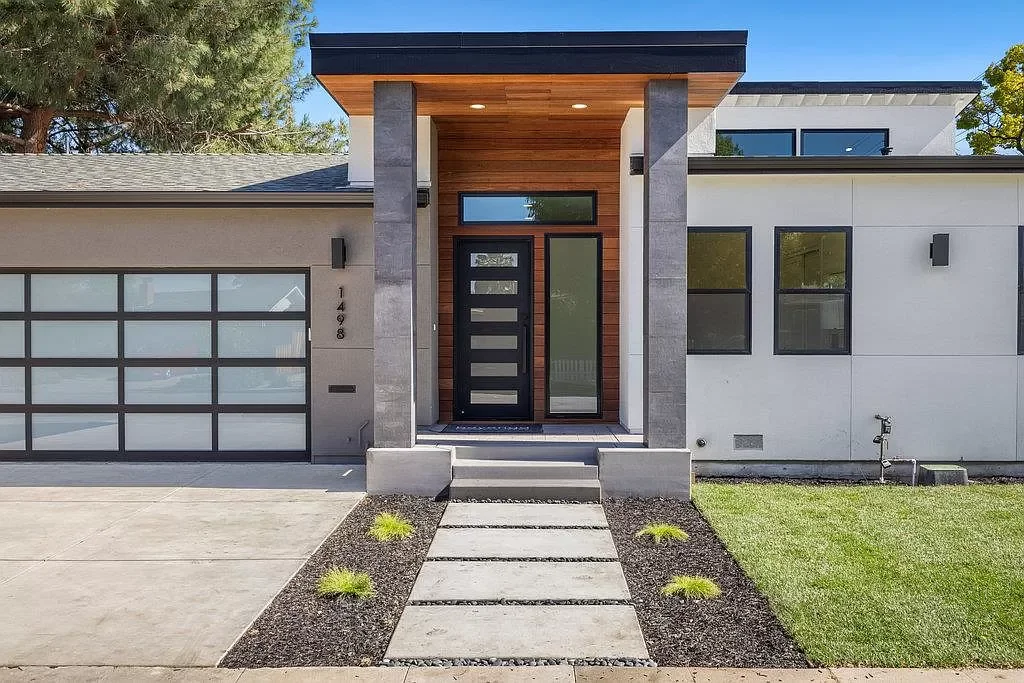
Design-build unifies accountability and shortens the path from first sketch to permit; separate contracts give you independent design oversight and the ability to competitively bid construction once drawings are complete. Neither saves more universally. What saves money is matching the structure to how defined your project is, how much design oversight you want to pay for, and how much tolerance you have for change orders once construction starts.
The honest version of this question is not "which costs less on paper" but "which keeps the total cost closer to the number you first agreed to." A $400,000 kitchen that finishes at $420,000 is a better financial outcome than a $350,000 kitchen that finishes at $510,000, and both scenarios are common. The delivery method shapes where cost grows and who absorbs the risk when it does.
Where the Money Actually Moves Between the Two Models
In a separate-contract arrangement, you pay an architect to produce a complete set of drawings before any contractor sees the project. The upside is clean: once the drawings exist, you can send them to three or four contractors and get bids on the same scope, which is the only true apples-to-apples pricing exercise available in residential construction. If the bids come back higher than you expected, you can revise the drawings and rebid without having chosen a builder yet. Design oversight stays independent through construction, because the architect is not on the contractor's payroll.
The cost you absorb for that structure is time and front-loaded design fees. Full architectural drawings for a whole-home remodel or a significant kitchen remodel typically take several months, and you are paying for them before you know whether the construction number will work. If the bids come back 30 percent over budget, the design fees are already spent and the drawings may need meaningful rework to hit a buildable number. That rework is itself billable.
Design-build compresses that sequence by putting design and construction under one contract from the start. Pricing feedback happens continuously, not after the drawings are done, which is why genuine design-build projects rarely produce the shock of a bid that is double the budget. The trade-off is that you lose the competitive bid moment. You are trusting the design-build firm to price its own work fairly, and you are giving up the second set of eyes that an independent architect brings during construction.
The Question That Changes the Answer
The single most useful question to ask yourself before choosing a model is: how defined is my vision right now, and how much am I willing to change it to hit a budget?
If you can describe your project in a paragraph, know roughly what finishes you want, have a budget range you are not willing to exceed, and want to break ground within six months, design-build almost always serves you better. The continuous pricing feedback keeps the scope and the number aligned, and the single contract means there is no gap where the architect blames the contractor and the contractor blames the architect for whatever just went wrong. For a focused bathroom remodel or a kitchen that lives inside the existing footprint, this is usually the shorter path to the same result.
If your project is genuinely architecturally ambitious, if you are reworking the roofline, moving the stair, or designing a whole-home remodel where the floor plan is still a question rather than an answer, independent design is worth paying for. An architect who is not responsible for building the project will push the design harder, consider options a design-build team might quietly skip because they know those options are hard to build, and give you a document detailed enough that contractors are bidding the same thing. For a complete home remodel with real design complexity, the separate-contract route often produces a better finished project even if it takes longer and costs more in fees.
The projects where separate contracting goes badly are the ones where homeowners choose it for the wrong reason, usually the belief that getting three bids will reveal the "real" price. In practice, three bids on an under-detailed drawing set produce three different interpretations of the scope, and the lowest number is almost always the one that missed the most. Competitive bidding only works when the drawings are tight enough that every bidder is pricing the same work.
What Actually Determines Which One Saves You More
Four factors move the math more than the delivery model itself.
The first is change orders. Change orders are the single largest driver of cost overruns in residential remodeling, and they come from two sources: scope that was never defined on paper, and site conditions discovered after demolition. Design-build tends to reduce the first category because pricing is live throughout design, and the contractor is involved early enough to flag the conditions that drive hidden cost. Separate contracts handle the second category better when the architect specifies a thorough pre-construction investigation. Neither model eliminates change orders. A written scope that lists what is included, what is excluded, and who absorbs the cost when something unexpected appears matters more than which structure you chose.
The second is the quality of the people, not the structure. A good architect paired with a good contractor produces a better project than a mediocre design-build firm, and a good design-build team produces a better project than a strong architect paired with a weak contractor. The structure is a framework; the people fill it in. When you interview either, ask to see finished projects of similar scope and complexity, and ask the previous homeowner what the final number was compared to the original contract.
The third is how your house is currently built. Older Bay Area homes carry conditions that only reveal themselves during demolition: knob-and-tube wiring behind lath and plaster, undersized panels, original cast iron drain lines, foundations that were never engineered for the load a modern addition imposes. The honest way to handle this is to budget a meaningful contingency, usually 10 to 20 percent of the construction cost, regardless of which delivery model you use. The remodels that come in on budget are the ones where that contingency was planned, not the ones where the first number was lower.
The fourth is time. Design-build is usually faster from first meeting to move-back-in, often by two to four months on a comparable project, and time has a real cost. If you are renting during construction, every month saved is a direct savings. If you are living through the remodel, every month shortened is a quality-of-life savings that does not show up in the contract but is just as real.
What to Ask Before You Sign Either Agreement
Whichever structure you choose, three answers in the written agreement prevent most of the disputes that surface mid-project: who has authority to approve design changes, exactly what work is included and excluded, and who absorbs the cost when scope shifts. In a design-build contract, confirm that pricing feedback happens at defined design milestones rather than only at the end. In a separate-contract arrangement, confirm who is coordinating between the architect and the contractor during construction, and whose decision is final when a field condition requires a change to the drawings.
Ask about allowances. Both models use them, and both models hide cost in them. An allowance of $15,000 for kitchen cabinetry on a project where the cabinets you actually want cost $45,000 is not a budget; it is a pending change order. If the finishes are not selected before the contract is signed, the allowances should be based on real pricing for products in the range you intend to use, not generic placeholders.
Ask what the firm does when the bid comes back over budget. In a design-build arrangement, this answer tells you how early and honestly they are pricing during design. In a separate-contract arrangement, this answer tells you whether the architect is willing to redesign without rebilling the full fee, and whether the contractor is willing to value-engineer collaboratively rather than simply refuse to work for the number.
The question of which model saves more money is really a question about which model gives you fewer surprises. Fewer surprises come from clearer documents, honest pricing early, and a team that treats the number you agreed to as a commitment rather than a starting point. Either structure can deliver that. Neither does so automatically.