
A 1950s ranch-style home in Willow Glen or a mid-century bungalow near Naglee Park can be a genuinely exciting remodeling project. The bones are often solid, the lots are generous, and the neighborhoods are exactly where people want to live. But older homes in San Jose carry layers of decisions made decades apart, and if you start in the wrong place, you'll find yourself tearing out brand-new tile to fix a plumbing problem that was there all along. The sequence matters more than most homeowners expect.
Assess the Structure Before You Plan the Aesthetics
The single biggest mistake we see in older San Jose homes is jumping straight to finishes. A homeowner falls in love with a kitchen layout, picks out cabinet fronts and countertops, and then the contractor opens a wall and finds galvanized steel pipes that haven't moved water properly in fifteen years. Now the budget is gone, and the cabinets are sitting in a garage.
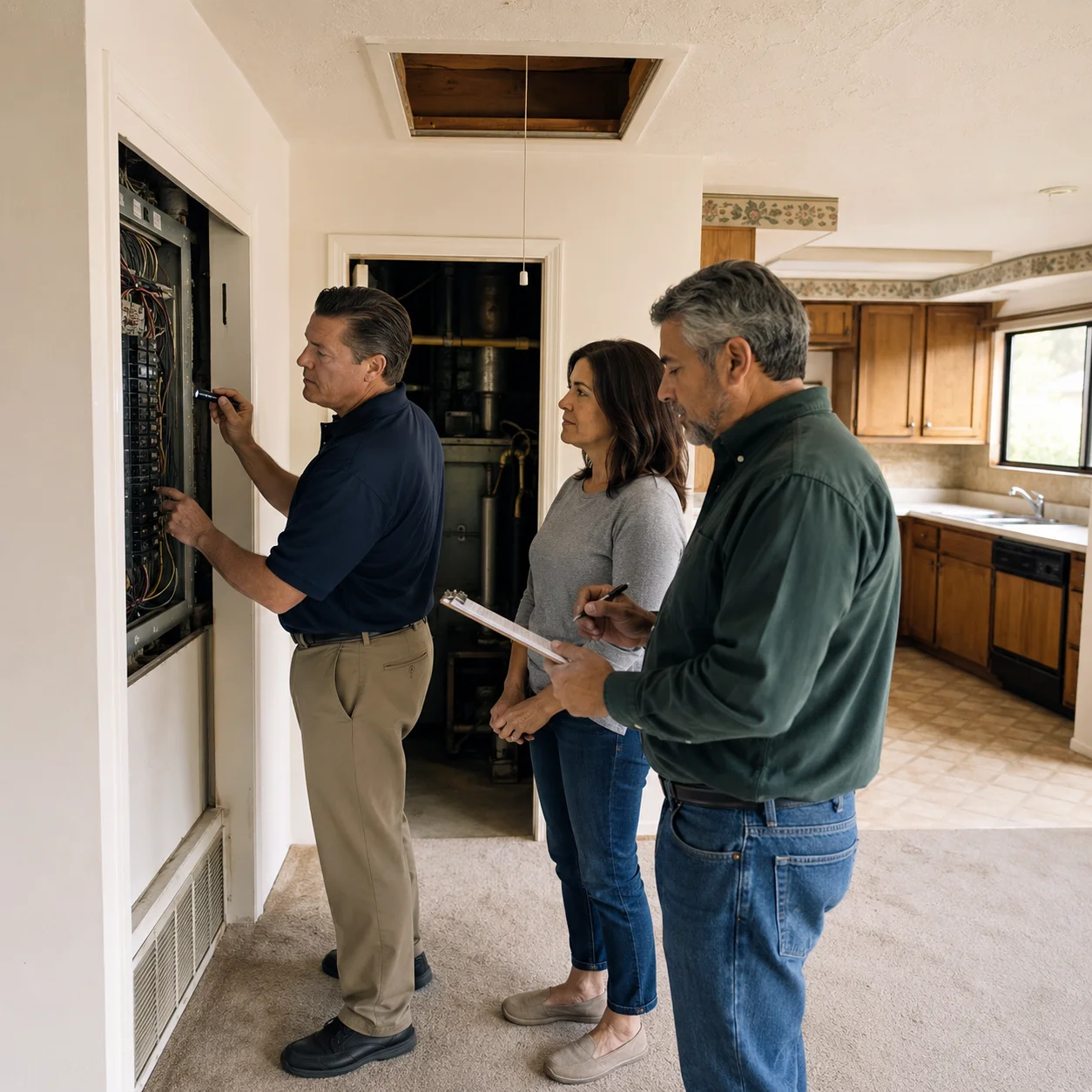
Before any design decisions get locked we walk through the home's foundational systems: the electrical panel, the plumbing supply and drain lines, the HVAC setup, and the structural framing. Homes built before 1980 in San Jose often have 60-amp or 100-amp electrical panels that simply can't support a modern kitchen, let alone a home office, EV charger, and central air conditioning running simultaneously. Upgrading to 200 amps isn't glamorous, but it's the kind of work that makes everything else possible.
Plumbing tells a similar story. Galvanized steel pipes, common in homes built through the 1960s, corrode from the inside out. The pressure drops, the water runs brown after a vacation, and eventually they fail. If you're already opening walls for a bathroom remodel, replacing the supply lines at the same time costs a fraction of what it would cost to do it as a separate project two years later.
Get Your Permits Straight Early
San Jose's permit process is not the place to improvise. The city has specific requirements around seismic retrofitting, energy efficiency upgrades, and ADU compliance that affect older homes in particular. If you're planning to add square footage, convert a garage, or change the roofline, those conversations with the city's building department need to happen before any design is finalized, not after.
We handle permitting for our clients because we've learned that surprises at the permit stage can delay a project by weeks and occasionally require redesigns that cost real money. Older homes sometimes have additions or modifications that were done without permits decades ago, and those unpermitted structures can complicate a new project significantly. Finding out about them early gives you options. Finding out during construction gives you headaches.
If your project involves adding a room or building an accessory dwelling unit, the permit timeline in San Jose can run anywhere from a few weeks to several months depending on the scope. That's time you can use productively to finalize materials, order custom items, and prepare the space, but only if you've started the process early enough.
Decide Which Rooms Drive the Most Value
Not every room in an older home needs the same level of attention. We've worked with homeowners who wanted to gut everything at once, and while that's sometimes the right call for a full renovation, most people are working with a real budget and need to prioritize. The kitchen and primary bathroom consistently deliver the strongest combination of daily-use improvement and resale value in the South Bay market.
That said, the right starting point depends on how you actually live in the house. If your family eats at home five nights a week and the kitchen layout makes cooking genuinely unpleasant, that's where the project should begin. If the master bathroom has one sink for two adults and a shower that hasn't been updated since 1978, that's probably the room that's affecting your quality of life most directly. You can see completed projects from both spaces in our San Jose kitchen and bathroom portfolio to get a sense of what's possible in homes similar to yours.
Plan for the Hidden Costs That Come With Older Construction
Every older home has at least one surprise inside the walls. We say this not to alarm anyone, but because being mentally and financially prepared for it changes the experience completely. Homeowners who budget a 10 to 15 percent contingency and expect to find something unexpected tend to handle surprises calmly. Homeowners who budget to the dollar and assume everything will go smoothly tend to have very stressful projects.
Common findings in San Jose homes built before 1978 include lead paint on trim and window sashes, asbestos in floor tiles or pipe insulation, and substandard framing around older additions. None of these are project-stoppers, but each one requires licensed abatement and adds time. Knowing they're possible means you can ask about them during the initial assessment rather than getting blindsided mid-project.
The good news is that once the remediation is done, it's done. You're left with a home that's genuinely clean and safe, not just cosmetically updated.
Match Your Design to the Home's Era (or Commit to Breaking From It)
Older San Jose homes have a character that's worth thinking about before you design. A well-preserved mid-century modern home in the Shasta-Hanchett Park neighborhood looks strange with a farmhouse kitchen dropped into it. The proportions don't match, the materials clash, and the result feels like two different houses sharing a roof.
We find that the most satisfying remodels either honor the original architecture, using period-appropriate details updated with modern materials and efficiency, or make a clear, intentional break from it. What doesn't work is a halfway approach where the design doesn't commit either direction. If you want a contemporary open-plan kitchen in a 1955 ranch home, we can make that work beautifully. But it takes a deliberate design hand, not just swapping out the cabinets.
You can browse our completed home remodeling projects to see how we've handled this balance across different neighborhoods and architectural styles. The range is wider than most people expect.
Sequence the Work So Each Trade Builds on the Last
Once the structural and systems work is complete and permits are in hand, the order of construction trades matters. Rough framing comes before electrical rough-in. Electrical rough-in comes before insulation. Insulation comes before drywall. Drywall comes before tile. Tile comes before fixtures. Running these out of sequence creates rework, and rework is expensive.
We coordinate all of this on our end so you don't have to manage subcontractor schedules yourself. But it's useful for homeowners to understand why a project that feels like it should take six weeks sometimes takes twelve. The sequencing isn't padding, it's the correct way to build something that holds up.
If you're ready to talk through where your older San Jose home should start, reach out to us for a free consultation and we'll walk the property with you before any commitments are made. The assessment alone usually clarifies the path forward more than any amount of planning from the.